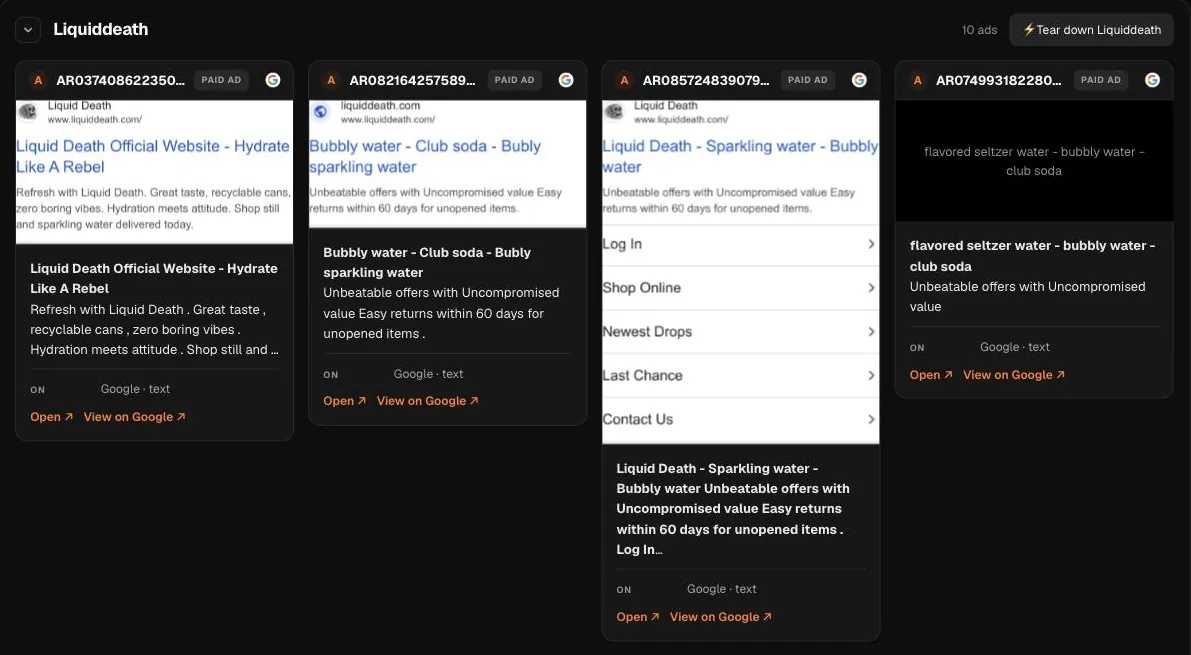
What this search shows
Google keeps a public record of the ads every verified advertiser runs. This search looks the advertiser up by the website you type, then lists its ad creatives across three kinds of placement: text ads from Google Search, image ads from the display network, and video ads from YouTube. Each card shows the creative, its format, and the first and last date Google showed it. Text ads also carry their headline and description when Google makes them available.
The list is ranked by how long each ad ran, the gap between first shown and last shown. Google discloses no spend, clicks or conversions for commercial ads, so that span is the most useful number on the card.
Why you search by website
Google files ads under the verified advertiser name, which is often a legal entity rather than the brand people know. A skincare brand might advertise as a holding company with "LLC" on the end, and a brand that uses an agency or a regional arm can sit under more than one name. Typing the domain skips that guesswork, because the website is what ties those accounts back to the brand. The bare domain works best, like allbirds.com.
Ways marketers use it
- Search copy research. Read the headlines and descriptions on a competitor's longest running text ads. These are the promises that keep earning clicks on the terms you both bid on.
- YouTube creative check. See whether a rival runs video on YouTube at all, and which video it has kept live the longest. A brand with many video ads and few text ads is buying attention, not only catching people who already search.
- Display and win-back ideas. Long running image ads are often the banners a brand shows to people who visited and left. Their offers show how the brand tries to bring a lost visitor back.
- Launch timing. A cluster of ads sharing one first shown date marks a campaign launch. Line those dates up with a competitor's product news or seasonal pushes.
How to read the results
A last shown date of yesterday or today means the ad is still running. Pair that with an early first shown date and you have an ad that has survived months of someone checking the numbers and deciding to keep paying. An ad first shown last week is a test. A short span that ended long ago usually marks an angle the brand tried and dropped, which is worth knowing too, because it is one less idea you need to test. Our post on run length as a winner signal explains why the span carries so much weight.
When an ad is worth borrowing, save it to a swipe file, or Clone it into a version for your product. Ad Spy can also suggest competitors you have not searched yet.
Honest limits
Google assembles search ad text per query from several headlines and descriptions, so the text on a card is one combination, not the full set. Headline and description are not always available, and some cards show only the creative. There is no spend or reach figure for ordinary commercial ads. And if a brand advertises from a second domain, such as a country site or a separate shop, search that domain as well to see the full picture.
Frequently asked questions
Is the Google Ads Transparency search free?
Yes. Type a brand's website and search its Google ads for free.
Which Google ads does it include?
Search text ads, display image ads and YouTube video ads on record for the advertiser, each with its format and first and last shown dates.
Why search by website and not the brand name?
Google lists ads under the advertiser's verified name, which is often a legal company name rather than the brand. The website ties those names back to the brand you mean.
What do first shown and last shown mean?
They are the first and most recent dates Google served the ad. A recent last shown date means the ad is still live, and a long gap between the two means the advertiser kept paying for it.
Can I see what a competitor spends on Google Ads?
No. Google does not disclose spend, clicks or conversions for commercial ads. How long an ad ran is the most useful public signal.
Why does a text ad show only part of its copy?
Search ads are built from several headlines and descriptions that Google mixes per search, and the text is not always disclosed, so a card shows what is available.
Hermoso turns what you find into finished ads and posts for your own brand, then runs your marketing on autopilot. Start free, 250+ earnable free credits, no card.
Start free → See pricing